
ADHD Does Not Need to Be ‘Fixed’: What Understanding a Child Can Change
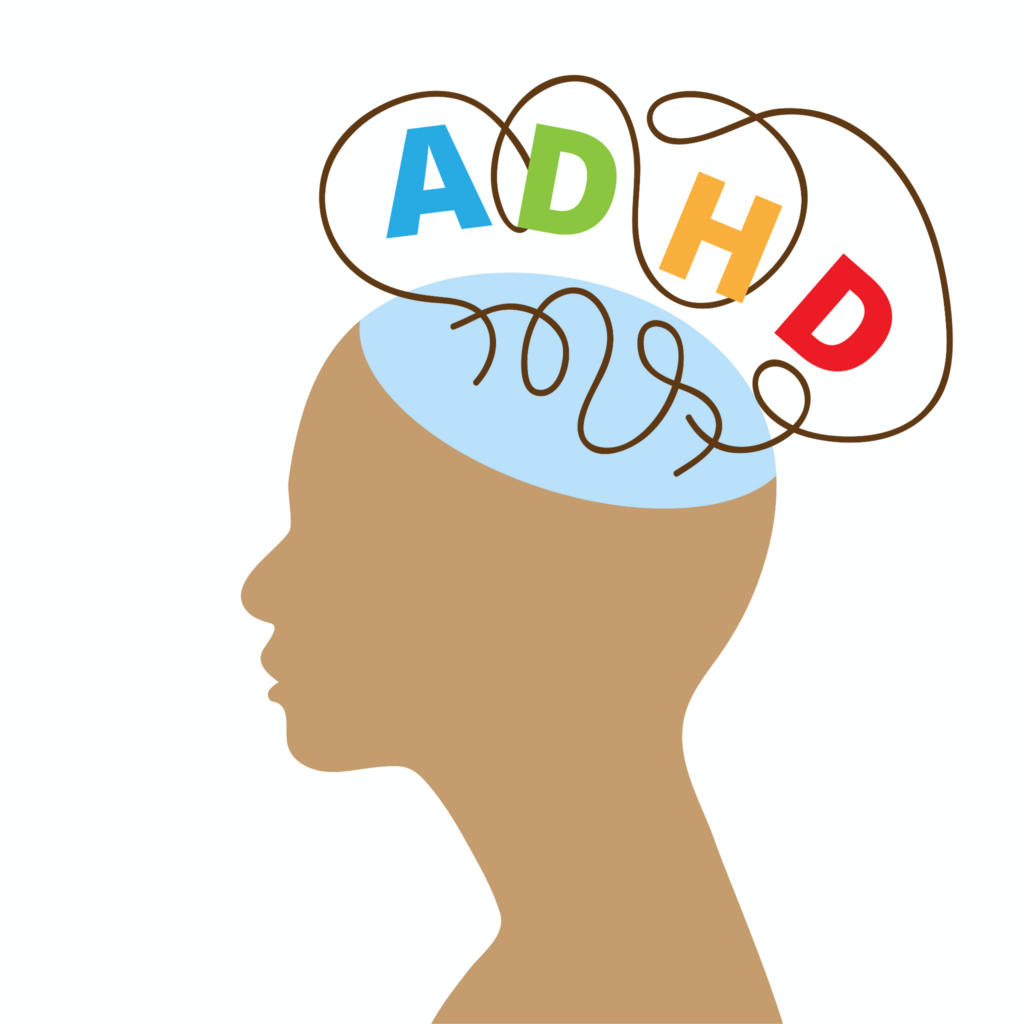
We do not have to choose between recognising that ADHD can create significant difficulties and recognising that an ADHD brain does not need to be treated as a faulty version of somebody else’s.
Oct 02
Summary
The goal is not to make a student appear less ADHD. It is to help them learn, whilst building independence and confidence in the process.
What changes when a child receives an ADHD diagnosis?
The child themselves has not suddenly changed. They are still the same person who walked into the assessment: with the same personality, interests, humour, frustrations, strengths and difficulties.
What can change is the way we understand them.
For some families, an ADHD diagnosis helps to make sense of things that have been difficult for years. Why getting out of the house can require so much effort. Why homework that should take twenty minutes can consume an evening. Why a child can concentrate intensely on something they love but struggle to begin something seemingly simple. Why organisation, transitions, emotional regulation or remembering everyday instructions can take so much energy.
During ADHD Awareness Month, there is understandably a great deal of conversation about recognising the signs of ADHD and accessing diagnosis. But there is another important question to ask:
What happens after we recognise it?
ADHD Does Not Have to Be a Defect to Be Real
Leanne Maskell is an ADHD coach, author and the founder of ADHD Works, where her work focuses on neuroaffirmative ADHD coaching, training and support. She is also open about her own lived experience of ADHD and autism.
Writing recently about the way ADHD is discussed publicly, Maskell made a deceptively simple point:
“ADHD does not have to be a defect to be real.”
That distinction matters.
We do not have to choose between recognising that ADHD can create significant difficulties and recognising that an ADHD brain does not need to be treated as a faulty version of somebody else’s.
A child can genuinely struggle to organise their belongings, regulate their attention, manage impulses, cope with transitions or complete schoolwork independently. Those difficulties deserve support.
But support does not have to begin from the assumption that the child is the thing that needs fixing.
Sometimes the environment needs to change too.
Look at the Environment, Not Only the Behaviour
Behaviour never happens in a vacuum.
A student who repeatedly gets out of their seat during an hour-long lesson may need movement. A child who cannot begin a page containing twenty questions may find the amount of information visually overwhelming. A young person who appears to ignore a string of verbal instructions may have lost track of them before the adult has finished speaking.
At home, the same child may repeatedly forget their PE kit, lose their keys or leave half-finished jobs around the house.
Simply identifying those behaviours tells us very little about what will help.
Good ADHD support asks a different set of questions.
- What is making this difficult?
- What happens immediately before it?
- Is the young person expected to hold too much information in working memory?
- Is the task sufficiently clear?
- Does it need breaking down?
- Would a visual prompt help?
- Is movement being treated as a disruption when it could actually support regulation?
- Is the environment full of distractions?
- Is the young person exhausted from managing the school day?
Once we understand the demand, we can start looking for the right support.

Parents Cannot Do Everything
There is another side to conversations about adapting the environment that we should not overlook: families need support too.
Advice around ADHD can sometimes leave parents with an enormous list of things they should apparently be doing differently. More exercise. Less screen time. Better routines. More time outdoors. Different food. More one-to-one attention. Greater consistency.
Some of these things may be helpful for an individual child. But knowing what might help and having the capacity to provide it every day are two very different things.
As Leanne Maskell asks:
“How many parents have the time, money, safe outdoor space, energy and practical support required to reproduce this intensive intervention indefinitely?”
Supporting a child with ADHD should not become another way of judging parents. Families are balancing work, school, siblings, appointments, finances and the ordinary pressures of daily life, often while trying to navigate education and healthcare systems at the same time.
The answer cannot simply be to give parents an ever-longer list of strategies to implement at home.
Good support should make life more manageable, not add another layer of pressure. That means identifying which changes are genuinely useful for that particular child, working collaboratively with families and making sure responsibility for support is shared across home, school and the professionals involved.
That is also why individualised support matters. Families do not need to create a perfect ADHD-friendly environment. They need practical strategies that are realistic enough to work in their real lives.
Support Is Not the Same as Lowering Expectations
Adapting the environment does not mean removing every difficult task or expecting less from a child with ADHD.
A student may still need to write the essay. Their bedroom may still need tidying. They still need opportunities to learn how to organise themselves, complete tasks and develop independence.
The question is how we help them get there.
An essay might begin with verbally organising ideas with a tutor before writing. A large homework task might be divided into visible stages. A morning routine might live on a visible checklist rather than relying on repeated verbal reminders.
These are not shortcuts around learning. They are scaffolds that make learning more accessible. The aim is to help a student discover which strategies allow them to manage more for themselves.
What This Looks Like at SEND Tutoring
This is particularly important in tutoring because one-to-one support gives us an opportunity to notice the individual learner rather than simply delivering more of the same work they have already encountered at school.
Our tutors can observe how a student approaches a task. Do they understand what is being asked but struggle to start? Do they rush because sustaining attention feels difficult? Do they become overwhelmed when too much appears on a page? Does verbal discussion reveal knowledge that is not appearing in their written work? Does movement improve concentration? Does choice increase engagement? Does a particular interest provide a useful route into learning?
Those observations matter. Rather than assuming that one ADHD strategy will work for every student, our tutors can build an individual picture of what supports that learner.
For one student, that might mean shorter chunks of focused work. For another, it could be visual planning, timers or checklists. Someone else may benefit from movement, working aloud, changing the format of an activity or seeing clearly what has been completed and what remains.
The goal is not to make a student appear less ADHD. It is to help them learn, whilst building independence and confidence in the process.

Diagnosis Can Change the Story We Tell About a Child
Perhaps one of the most important things an ADHD diagnosis can change is the language surrounding a young person. A child who has repeatedly been described as disorganised may be struggling with executive functioning. The student who is always being reminded to “pay attention” may be putting enormous effort into regulating attention in an environment that makes that difficult. Initiating a task, estimating time and motivating themselves towards a distant deadline can all be difficult with ADHD.
None of this means behaviour has no consequences or that ADHD explains every difficulty.
It means we have more useful information. That information gives us somewhere to go.
As children grow older, understanding their own ADHD is increasingly important. They need opportunities to identify what helps them learn, communicate what they find difficult and develop strategies they can eventually use without an adult organising everything around them.
That is self-advocacy, and it is a skill worth teaching.

From Awareness to Understanding
Awareness months are useful when they encourage us to notice something differently. For ADHD Awareness Month, recognition is an important starting point. But awareness should lead somewhere.
It should lead to a better understanding of why a child might be struggling.
It should help parents and educators distinguish between what a young person cannot yet manage independently and what they simply will not do.
It should encourage us to look at the demands of the environment as well as the behaviour of the child. Young people deserve to understand themselves without growing up believing that needing a different approach means there is something fundamentally wrong with them.
But as Leanne Maskell puts it, ADHD does not have to be a defect to be real.
Understanding that gives us a much better place from which to teach, support and listen.
Support for Every Learner
Discover how SEND Tutoring supports students with a wide range of needs, including autism, ADHD, dyslexia, PDA, SEMH, epilepsy, and more.
Resources and Insights
Stay Connected
Follow us on social media for updates, tips, and stories from our SEND community.
About the author
Ella Jones
If you’re looking for support for a child or young person with special educational needs or a disability, book a free call with us today and find out how we can help.
Share this
Podcast, blog and more
More news and resources from SEND Tutoring
Support
Oct 02
8 Min Read
ADHD Does Not Need to Be ‘Fixed’: What Understanding a Child Can Change
We do not have to choose between recognising that ADHD can create significant difficulties and recognising that an ADHD brain does not need to be treated as a faulty version of somebody else’s.

Media
Oct 02
11 Min Read
The Dopamine Menu: Keeping ADHD Brains Motivated
This ADHD Awareness Month, discover how a dopamine menu can help us work with, rather than against, the way ADHD brains respond to motivation and reward.

Support
Sep 24
3 Min Read
Isaac Harvey Takes on the Berlin Double
Isaac and Kevin are aiming to raise £5,000 for Wheels and Wheelchairs, an inclusive sports club that brings wheelchair users and roller skaters together.