
The Dopamine Menu: Keeping ADHD Brains Motivated
This ADHD Awareness Month, discover how a dopamine menu can help us work with, rather than against, the way ADHD brains respond to motivation and reward.
Oct 02
Summary
A dopamine menu, sometimes called a “dopamenu”, is a personalised collection of activities and strategies that provide stimulation, enjoyment, interest, movement or a sense of reward.
One of the most confusing things about ADHD can be the inconsistency. A young person might struggle to get started on a straightforward piece of schoolwork, yet become completely absorbed in an interest for hours. They may put off a simple household chore all afternoon but respond instantly to something new, exciting or urgent.
From the outside, it can look like a question of motivation. Look a little closer, though, and reward is an important part of the picture.
Our brains are constantly deciding what deserves attention, what feels worth the effort and what we want to do again. One of the chemical messengers involved in that process is dopamine. Understanding the role dopamine plays in motivation and reward can help us make sense of some common ADHD patterns and, more importantly, think differently about how we support children and young people.
That is the thinking behind the dopamine menu: a simple, personalised way of bringing more of the stimulation, interest and reward an ADHD brain responds to into everyday tasks, from learning and tutoring to homework and household chores.
First, What Actually Is Dopamine?
Dopamine is a neurotransmitter, one of the chemical messengers the brain uses to communicate. It has several functions, including roles in movement and learning, but it is particularly relevant here because of its involvement in motivation, reward and reinforcement.
You may have heard dopamine described as the brain’s “pleasure chemical”. That is catchy, but it misses much of what makes dopamine interesting. Dopamine is involved in anticipating rewards and learning what is worth pursuing and repeating. In other words, it helps the brain decide: Is this worth my attention and effort?
ADHD is associated with differences in the brain systems involved in dopamine signalling, motivation and reward processing. It is sometimes simplified online into the claim that ADHD brains simply “do not have enough dopamine”, but the science is more complex than that.
What is particularly useful for parents and educators to understand is that the timing and immediacy of a reward can matter greatly in ADHD. Many people with ADHD show a stronger preference for rewards that are available now rather than rewards that are larger or more valuable but further away.
That can make everyday life interesting.
The long-term benefit of completing a revision timetable may struggle to compete with a video game that is rewarding immediately. A tidy bedroom will feel good eventually, but sorting a mountain of clothes offers very little stimulation right now. Twenty repetitive maths questions may be important for next month’s exam, but that future consequence can feel remarkably distant compared with whatever is currently capturing attention.
But when a task offers novelty, genuine interest, movement, challenge or a more immediate sense of reward, engagement can look very different.
This helps explain a pattern that can sometimes be misunderstood in ADHD: attention is not simply absent, but can be strongly influenced by how stimulating, interesting or rewarding a task feels.
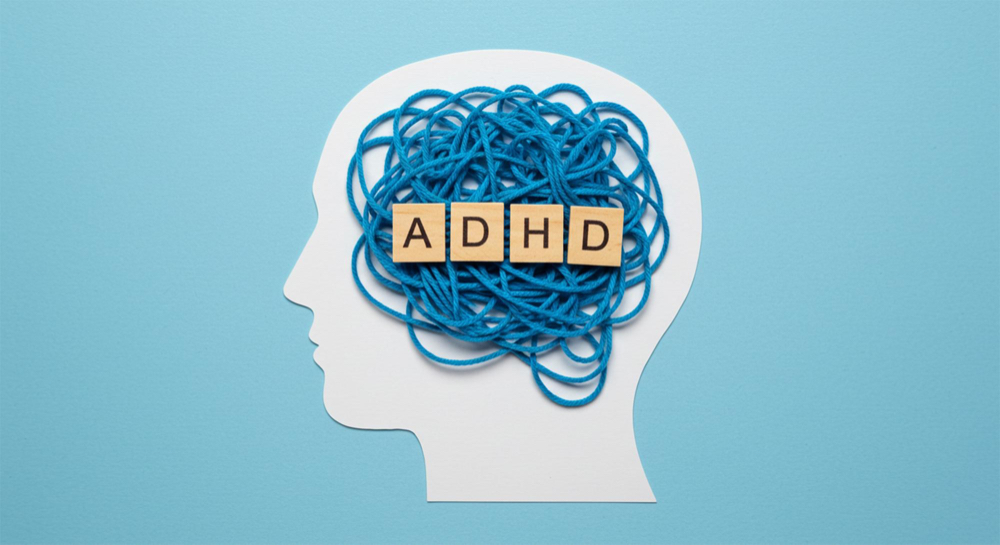
When the Brain Goes Looking for Stimulation
Differences in reward processing can help explain why some people with ADHD are particularly drawn to activities that offer quick stimulation or an immediate payoff. Gaming, scrolling, social interaction and novelty can all provide this. Food can too, and impulsivity or trouble self-regulating can contribute to overeating or frequently reaching for highly palatable or sugary foods.
Sleep difficulties are also common in ADHD. Some children and young people struggle to fall asleep, wake in the morning or maintain consistent sleep routines, while others may experience daytime sleepiness or appear to sleep excessively.
These patterns will not apply to everyone with ADHD, but they highlight something important: stimulation, reward and regulation can shape everyday behaviour in ways that are easy to misread.
This is where a dopamine menu can be useful.
So, What Is a Dopamine Menu?
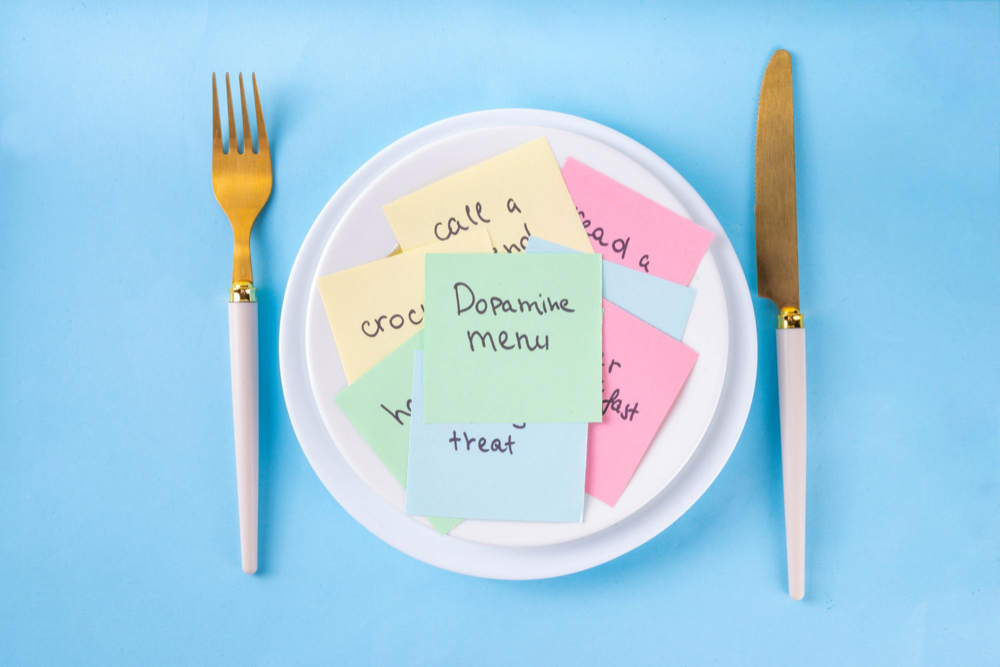
A dopamine menu, sometimes called a “dopamenu”, is a personalised collection of activities and strategies that provide stimulation, enjoyment, interest, movement or a sense of reward.
The idea borrows the format of a restaurant menu, which makes it easy to remember and, particularly for younger students, quite fun to create.
A menu might include:
- Starters: quick activities that can help someone get going, such as listening to a favourite song, stretching, getting outside for five minutes, having a drink or snack, or doing a short burst of movement.
- Mains: activities that provide more sustained enjoyment or stimulation, such as exercise, drawing, baking, seeing friends, gaming, playing music or spending time on a favourite interest.
- Sides: things that can be added to another task to make it easier to engage with, such as music while tidying, using a fidget while listening, working alongside somebody else, standing rather than sitting or using a whiteboard instead of another worksheet.
- Desserts: highly rewarding activities that can be enjoyable but are easy to spend much longer on than intended, such as social media, gaming or watching videos.
- Specials: bigger activities or experiences that happen less frequently and give someone something to anticipate.
There is no definitive dopamine menu, and there shouldn’t be. What is stimulating, regulating or rewarding for one person may be distracting or thoroughly uninteresting to another.
The menu also isn’t a behaviour chart dressed up with a fashionable name. A child should not have to “earn dopamine” by behaving well.
Its value lies in identifying what helps an individual brain become engaged, regulated or ready to tackle something that offers less immediate reward.
This way of thinking reflects a much wider principle in good SEND support.
Laura Kerbey is an author, education consultant and neurodiversity specialist who has spent more than two decades working with autistic and neurodivergent children and young people. She also brings lived experience to her work, having received her own ADHD diagnosis in adulthood.
In her book, The (Slightly Distracted) Woman’s Guide to Living with an Adult ADHD Diagnosis, Kerbey writes:
“When ADHD is understood, the focus can move away from trying to fix the person and towards creating the environments, support and strategies that allow them to thrive. That is why access to diagnosis, recognition and understanding matters so much, in workplaces and schools as much as anywhere.”
That principle is central to the way we work at SEND Tutoring.
Supporting a student with ADHD should not be about training them to behave as though they do not have ADHD. We want to understand the individual learner: what engages them, what drains them, what helps them regulate, what makes it easier to begin and what helps them sustain their attention once they have started.
A dopamine menu can form one small but useful part of that approach.

How We Can Use Dopamine Menus in Tutoring
For our tutors, the useful part of the dopamine menu is not simply promising something enjoyable once the “real work” is finished.
The principles can be woven into the learning itself.
A student who finds repetitive written work difficult might complete some questions on paper and others on a whiteboard. Another might benefit from alternating activities rather than spending a long stretch on one type of task.
Movement can be planned into the session rather than saved until concentration has completely disappeared. A short physical reset between activities may help a student return ready for the next part.
Choice can also make a difference. Choosing which task to begin with, where to work or how to demonstrate an answer gives the student some ownership without removing the learning objective.
Our tutors also use a student’s interests thoughtfully. Football, animals, Minecraft, music, fashion, trains, theatre or a particular period of history can sometimes provide the route into reading, writing, maths or problem-solving. The aim is not to shoehorn a favourite topic into every activity, but to recognise that interest can be a powerful gateway to engagement.
Timers, challenges, quizzes and visible progress can provide a more immediate sense of achievement too. For some students, seeing three short tasks that can be ticked off is far more approachable than being presented with one large block of work.
The learning goal remains the same. What changes is the route we take to reach it.
Beyond Learning: Dopamine Menus at Home
Consider something as mundane as tidying a bedroom.To an adult, “tidy your room” can sound like one task. In reality, it contains dozens of decisions. Where do I begin? Which clothes are clean? Where does this go? Should I do the desk first? What about everything under the bed?
Add very little immediate reward to the equation and getting started can become disproportionately difficult.
A dopamine menu gives you other ingredients to work with.
Put on a favourite playlist. Choose one category rather than tackling the entire room. Start with clothes, rubbish or the desk. Set a ten-minute timer. Have someone work alongside the young person for the first few minutes. Build in movement. Make the finishing point obvious.
The room still needs tidying. The expectation has not disappeared. But the environment around the task has changed.
The same approach can help with getting ready for school, packing a bag, completing chores, practising an instrument, revision or getting through an evening routine.

Making Homework More ADHD-Friendly
Homework is an obvious place to experiment with a dopamine menu because it often arrives at exactly the wrong time: after a full day of concentrating, following instructions, managing transitions and navigating the demands of school.
Imagine a student comes home with spelling practice and a maths worksheet.
Rather than going directly from school mode into another block of seated work, their menu might offer a few possibilities.
A starter could be a snack, ten minutes outside or a favourite song.
For the work itself, they might choose whether to begin with spelling or maths, use a whiteboard for calculations, work at the kitchen table with somebody nearby or tackle a short number of questions against a timer.
Between tasks, a reset might involve kicking a football outside, stretching, getting a drink or moving around for a few minutes.
After the agreed amount of work, they choose something from their menu that they genuinely enjoy.
The important part is that the menu is created with the young person, rather than presented to them as another adult-designed system.
Ask what makes boring jobs easier. Does music help or make concentration harder? Does working beside somebody help them stay on track? Do they need movement before sitting down? Do timers feel motivating or stressful? What gives them a quick reset without making it impossible to return to the task?
The answers will be different for every child.
And they may change. Something that provides novelty this month may have completely lost its appeal by next month. A dopamine menu is supposed to evolve.
Keep Dopamine in Perspective
Dopamine has become a popular word online, and there is a danger in using it to explain every aspect of ADHD.
ADHD is complex. Attention regulation, executive functioning, working memory, inhibition, emotion, arousal, sleep and an individual’s environment can all affect how they function. Dopamine is part of that picture, not a single explanation for it.
A dopamine menu should therefore be treated for what it is: a practical strategy built around the understanding that motivation and reward can operate differently in ADHD.
For parents, educators, tutors and professionals, perhaps its greatest value is the change in perspective it encourages.
When a child can spend hours absorbed in one activity but struggles to begin another, we can look beyond willingness alone. What is different about those two tasks? How immediate is the reward? How much stimulation does each provide? Could movement, novelty, choice, challenge, company or a clearer sense of progress make the difficult task more accessible?
Over time, the young person can become part of that detective work too.
They begin to notice which environments help them concentrate, which activities reset them, what makes getting started easier and when they need to change strategy.
Ultimately, that is much more important than any particular menu.
It is helping a child or young person understand how their brain works and what helps it work at its best.

Support for Every Learner
Discover how SEND Tutoring supports students with a wide range of needs, including autism, ADHD, dyslexia, PDA, SEMH, epilepsy, and more.
Resources and Insights
Stay Connected
Follow us on social media for updates, tips, and stories from our SEND community.
About the author
Ella Jones
If you’re looking for support for a child or young person with special educational needs or a disability, book a free call with us today and find out how we can help.
Share this
Podcast, blog and more
More news and resources from SEND Tutoring
Support
Oct 02
8 Min Read
ADHD Does Not Need to Be ‘Fixed’: What Understanding a Child Can Change
We do not have to choose between recognising that ADHD can create significant difficulties and recognising that an ADHD brain does not need to be treated as a faulty version of somebody else’s.
Media
Oct 02
11 Min Read
The Dopamine Menu: Keeping ADHD Brains Motivated
This ADHD Awareness Month, discover how a dopamine menu can help us work with, rather than against, the way ADHD brains respond to motivation and reward.

Support
Sep 24
3 Min Read
Isaac Harvey Takes on the Berlin Double
Isaac and Kevin are aiming to raise £5,000 for Wheels and Wheelchairs, an inclusive sports club that brings wheelchair users and roller skaters together.